

Chaired by H.E. CST Governor AlOhali The Saudi delegation Participated in the ITU’s Council 2026


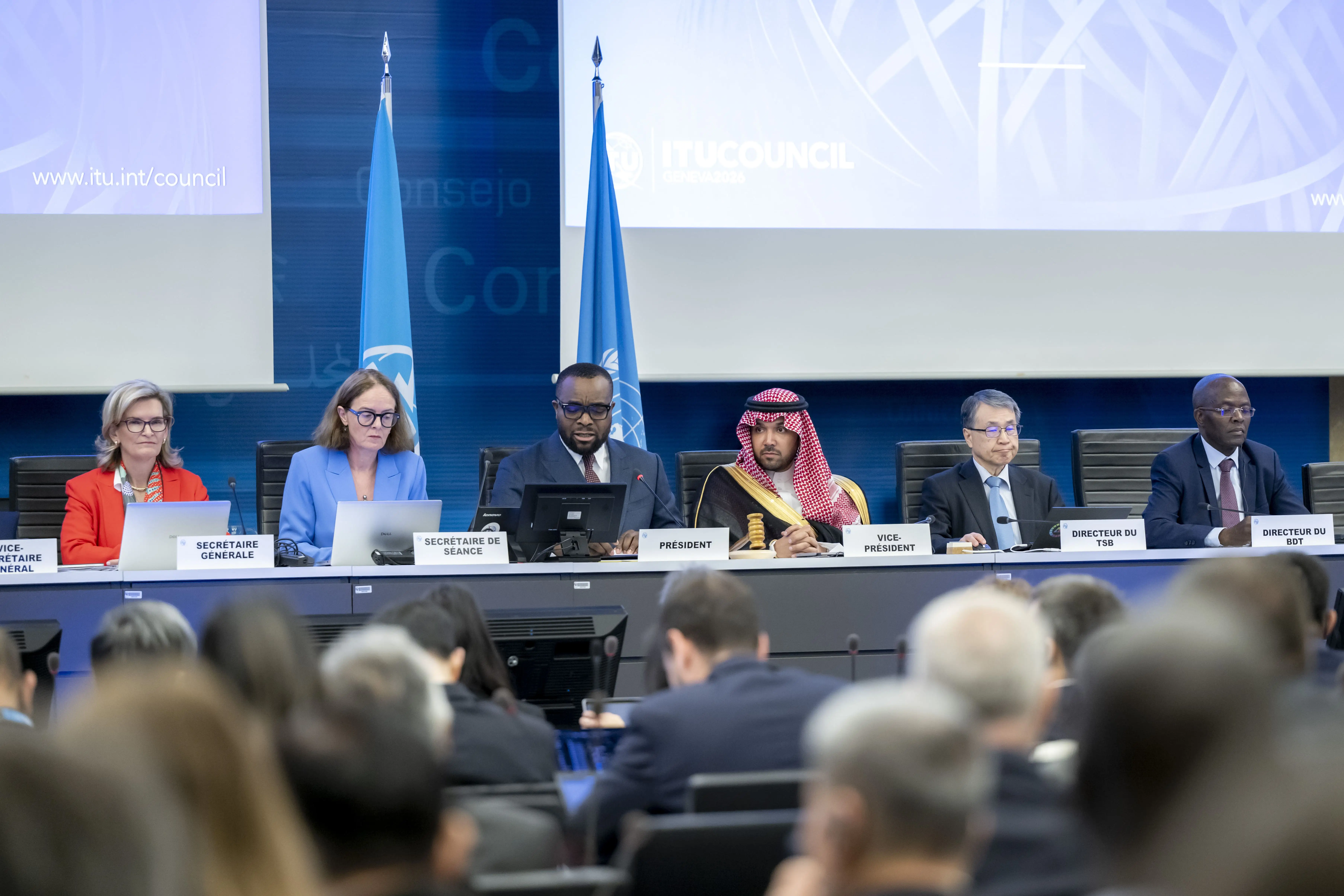
The Kingdom’s delegation, chaired by H.E. the Governor of the Communications, Space and Technology Commission (CST), Eng. Haytham Alohali, participated in the 2026 session of the International Telecommunication Union Council, held in Geneva, Switzerland, in the presence of H.E. Permanent Representative of the Kingdom of Saudi Arabia to the United Nations in Geneva, Ambassador Abdulmohsen Majed Bin Khothaila. This participation comes as part of the Kingdom’s efforts to strengthen international cooperation in developing the Communications, Space, and Technology sectors, supporting the Union’s activities, and leveraging all available capabilities, resources, and specialized human expertise in these fields, while supporting the ITU member states, and developing countries.
During the session, Eng. AlOhali delivered his opening remarks, emphasizing that the world is facing a range of challenges that requires stronger international coordination to achieve strategic priorities that will shape the future of the ITU. He noted that rapid transformations, technical changes, and increasing restrictions on resources create a reality that underscores the importance of the Union, highlighting that our responsibility lies in ensuring its continued leadership and adaptability in guiding the future of the digital sector for the benefit of all humanity.
Al-Ohali further stated that the Kingdom views connectivity and digital infrastructure as critical pillars of development and growth. A decade after the launch of Saudi Vision 2030, the Kingdom has become a model in leveraging digital transformation to achieve comprehensive developmental impact. This progress is reflected in its global advancement and its contribution to promoting digital inclusion worldwide.
He also highlighted the significant leap in the Kingdom as a result of Vision 2030 initiatives. The digital economy has reached approximately $139 B as of 2025, contributing around 15% to GDP. Mobile internet speeds have increased from 9.2 Mbps in 2017 to over 214 Mbps in 2026, placing the Kingdom among the top ten countries globally. Meanwhile, internet penetration has raised from 68% to nearly 100%.
Al-Ohali highlighted the Kingdom’s regulatory and policy transformation, noting that it ranked first globally in the Digital Readiness Index. He also pointed out that women’s participation in the technology sector has increased from 7% to 35%, the highest rate in MENA region, surpassing the averages of both the G20 and the European Union.
He affirmed that the Kingdom continues its active partnership with the ITU to convert progress into initiatives with global impact. In bridging the digital divide, a roadmap was announced to connect humanity and promote inclusivity, particularly in developing countries. Accompanied by the launch of a global economic model study to support sustainable investment in digital infrastructure. In addition, the Kingdom collaborated with ITU to train more than 1,500 specialists from 190 countries through the Digital Regulatory Academy (DRA), and launched an initiative to empower female leaders, which has contributed to training over 300 women from member states.
On artificial intelligence (AI), Al-Ohali noted that the Kingdom is aiming to develop more than 6 gigawatts of computing capacity by 2030. Leveraging its advantages in energy availability, land, investment strength, and strategic location, to help close the global compute gap and support developing countries and the world. While reaffirming the Kingdom’s commitment to the ITU’s mission of connecting people, building capacity, fostering trust, and advancing technology for sustainable development.
This session marks the final Council cycle for the 2023–2026 period, preceding the Plenipotentiary Conference and addressing many of its topics. The ITU Council comprises 48 member states, including the Kingdom, out of a total of 194. The Council oversees the Union’s work between Plenipotentiary Conferences, guiding its activities, monitoring the implementation of its policies and budget, approving operational and financial plans, supervising programs, and providing recommendations on general policies for sector development, making it a central mechanism for ensuring the efficiency and continuity of the Union’s work.
Date
28/4/2026
Hijri Date
11/11/1447
Reading Time
0 minute