

Telecommunications and Information Technology Sector Continues Its Flourishing Journey Since Its Establishment by the Founder
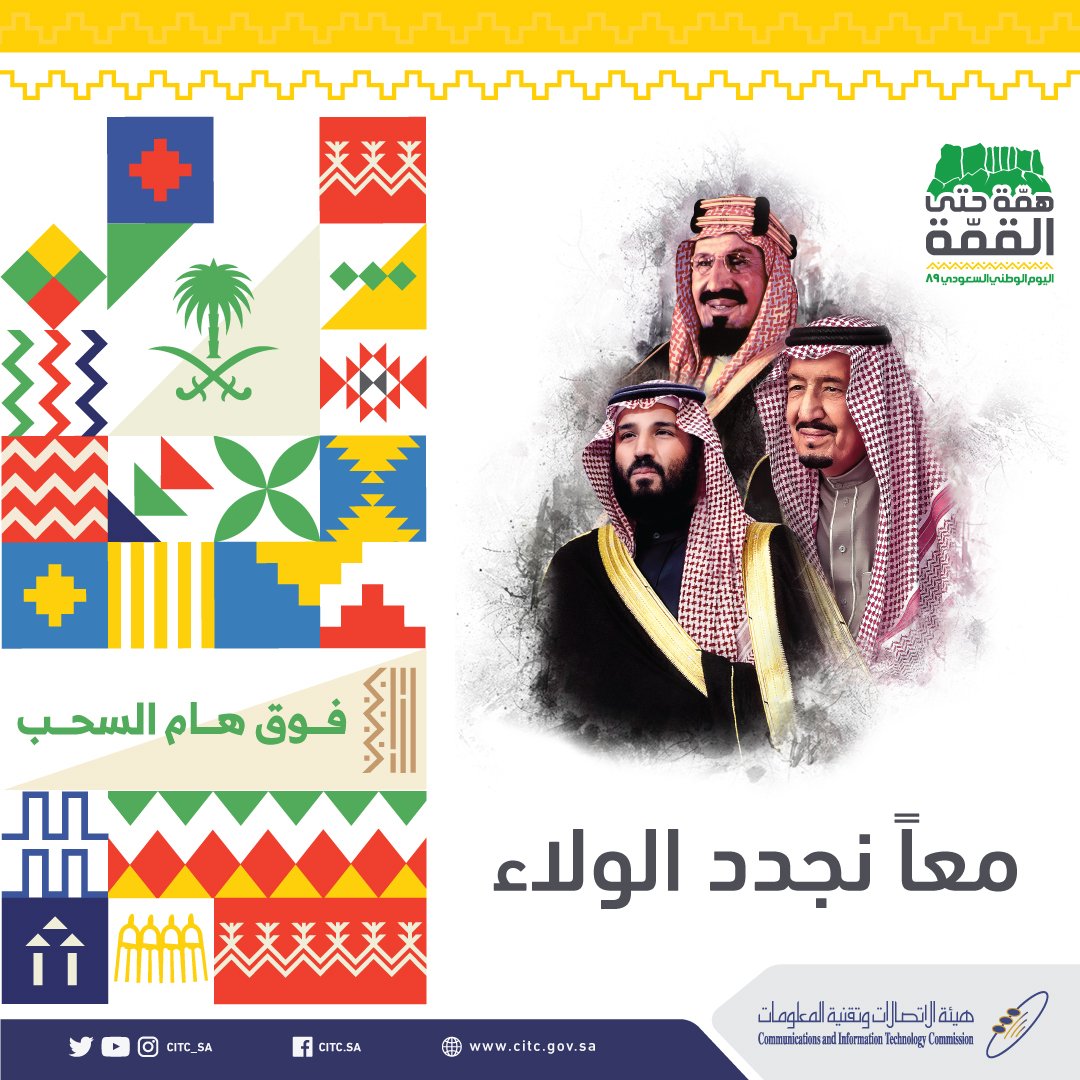
The telecommunications and information technology sector in the Kingdom took its first steps early on, since the era of its founder, King Abdulaziz bin Abdulrahman Al Saud - may God have mercy on him - who, immediately after completing the unification of its territories, undertook to establish essential services, including providing a means to carry out the task of communication and linking the Kingdom's various regions with one another and with the outside world, issuing his royal order in 1345H, corresponding to 1926, to establish the Telegraph and Telephone Directorate, and in 1353H, corresponding to 1934, the Kingdom established (22) wireless stations to connect (22) cities and villages in the Kingdom with telegraph services.
The state's attention to this sector continued thereafter, with the privatization program aimed at raising the efficiency of the national economy and increasing its competitiveness by liberalizing service markets and opening the door to competition to provide advanced telecommunications and information technology services throughout the Kingdom comprehensively, with high quality, and at reasonable prices; through several stages beginning with converting the government entity providing telecommunications services in 1418H, corresponding to 1998, into a company managed on a commercial basis, followed by the stage of organizing and structuring the telecommunications sector and establishing the necessary regulations, rules and procedures for it, with the establishment of the Communications and Information Technology Commission in 1422H, corresponding to 2001.
During this period, the telecommunications and information technology sector in the Kingdom is witnessing a remarkable transformation at the international and regional levels and significant government support, which has enabled the sector to continue developing and modernizing in pursuit of keeping pace with the tremendous developments constantly and continuously witnessed in this field; given the sector's importance and its vital role in supporting the development and advancement process, during this flourishing era, after the telecommunications and information technology sector was classified as one of the most important pillars of Saudi Vision 2030, working through a set of initiatives and programs to raise the level of innovation in advanced technologies, enhance the value of investment in the digital economy, strengthen the foundations of e-commerce, and enable digital government transactions in a way that contributes to achieving the goals of the Kingdom's Vision.
The Communications and Information Technology Commission is working to achieve these aspirations by strengthening infrastructure, having launched a package of notable projects and initiatives, including the initiative to open broadband access to fixed telecommunications networks to more than one service operator in the Kingdom, increasing the frequency spectrum allocated to service providers, enabling 5G technology, and others.
These efforts were crowned by the announcement of the Kingdom's ranking in second place among G20 countries in allocating frequency bands for providing telecommunications services, after succeeding in increasing frequency spectrum allocations and raising the average mobile internet speed from 9.2 Mbps at the end of September 2017 to 43.30 Mbps by the end of August 2019, placing the Kingdom in 23rd place in internet speed worldwide according to the global Speedtest report.
This continued support and development resulted in the recording of a number of record figures, with the Communications and Information Technology Commission's indicators showing the sector's success in accommodating the growing demand for telecommunications and information technology services, and delivering them with high quality, peaking during the Hajj and Umrah seasons in Makkah and Madinah, where statistics during the last ten days of Ramadan 1440H showed 15 million calls being made, in addition to recording high levels of data consumption volume reaching (25.1) thousand terabytes, while the average data download speed reached 32 Mbps during that period.
During the 1440H Hajj season, the volume of voice calls reached 364 million calls, while data consumption volume during the entire season exceeded (38.9) thousand terabytes, at a speed of 44 Mbps.
The telecommunications and information technology sector recently witnessed the announcement of its strategy, among whose most notable promising 2023 targets is the sector's contribution to GDP of no less than SAR 50 billion over five years, in addition to increasing the size of the information technology and emerging technologies market by 50%, raising the level of localization in the sector to reach 50%, creating more than 25,000 jobs in the sector, and raising women's participation in the sector by 50%.
Throughout this flourishing journey, the generous patronage of the wise leadership for the telecommunications and information technology sector has been the principal supporter and foremost driver of its performance and the development of its services.
Date
22/9/2019
Hijri Date
22/01/1441
Reading Time
0 minute