

Governor of the Communications Commission: 86 Years of Growth and Progress in Various Fields
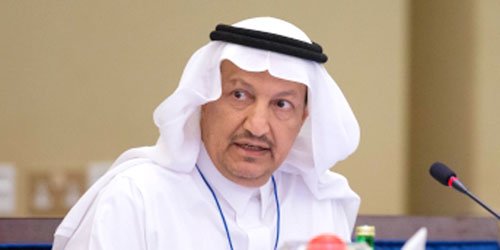
His Excellency Dr. Abdulaziz bin Salem Al-Ruwais, Governor of the Communications and Information Technology Commission, extended, on his own behalf and on behalf of the Commission's staff, the highest expressions of congratulations and best wishes to the Custodian of the Two Holy Mosques King Salman bin Abdulaziz Al Saud, his trusted Crown Prince, and the Deputy Crown Prince – may God preserve them all – and to the dear Saudi people, on the occasion of the Kingdom's 86th National Day anniversary.
In a statement on this occasion, he said: "This anniversary serves as a reminder of the Kingdom's history, beginning with the era of the Founder, King Abdulaziz bin Abdulrahman Al Saud – may God have mercy on his soul – through the achievements of his sons, the kings who succeeded him – may God have mercy on them – up to the era of the Custodian of the Two Holy Mosques King Salman bin Abdulaziz Al Saud – may God preserve him," praying to Almighty God to bless this nation and its people with security, safety, prosperity, progress, and flourishing.
Dr. Al-Ruwais explained that our dear nation today continues, under the leadership of the Custodian of the Two Holy Mosques – may God protect him – to move forward with confident steps toward growth and progress encompassing various sectors, with unlimited support, to spread prosperity and flourishing for this nation and its people, noting the care and support that the communications and information technology sector receives from the wise leadership, which has been behind achieving these developmental leaps to meet aspirations, serve citizens, facilitate their transactions, and help government entities perform their work with high efficiency, and raise the efficiency of the national economy.
He noted that the communications sector in the Kingdom has achieved leading positions at both the regional and international levels, as the Commission has succeeded in delivering communications and information technology services to remote and commercially unprofitable areas through Universal Service Fund projects aimed at providing voice services and broadband internet services to remote areas, with the total number of population clusters served reaching (17,529) by the end of the second quarter of 2016.
The Governor of the Communications and Information Technology Commission said: "The communications and information technology market in the Kingdom is currently the largest in the Middle East region in terms of capital value and spending volume, with capital investments in the sector estimated at more than SAR 30 billion, and spending on communications and information technology services exceeding SAR 120 billion during 2015, while the communications and information technology sector contributed about (6%) to the Kingdom's GDP by the end of 2015. Spending on communications and information technology services is expected to grow to (138.48) billion riyals by 2017, due to significant investments from the government and private sectors."
He said: "The communications and information technology services market is expected to witness strong growth in demand for the latest technology products and information protection and security software, with increasing interest in modern technologies and interactive applications, in line with new developments in information technology and communications networks, which will be positively reflected in the growing direct investment in communications and information technology services and their supporting services."
The Governor of the Communications and Information Technology Commission explained that the sector has continued its path of growth and expansion, as the current phase has seen the emergence of a need to provide more options for users of communications and information technology services in the Kingdom, redouble subscriber care, improve services, and provide more innovation and diversity in packages, noting that the Commission responded to these needs and developments by taking a number of steps, the most important of which was opening the market for Mobile Virtual Network Operator (MVNO) services.
As a result, two operators launched their services in the market, with a request for proposal document issued for a license for a third operator, bringing the number of mobile telecommunications service providers in the Kingdom to 5 operators. A license for a third virtual operator is expected to be granted, increasing this number to (6) operators.
Regarding the performance of the communications and information technology sector in the Kingdom, the Governor of the Communications and Information Technology Commission explained that the sector continues to maintain a penetration rate classified among the highest in the world in terms of mobile telecommunications services penetration among the population, reaching (152%) at the end of the second quarter of 2016, while internet penetration reached more than (70.4%) among the population as well, and the number of subscriptions to broadband services via mobile and fixed telecommunications networks reached about (29.6) million subscriptions.
The unlimited support provided by the government for high-technology projects requiring good digital infrastructure has had a notable impact on increasing the level of demand for broadband services. It has also become evident that many government procedures are now being carried out through electronic government transactions. For this reason, demand for internet services is expected to witness a notable increase in the coming few years, as a result of the availability of fiber-optic networks (FTTx) and the high speeds they provide, the growing factors supporting and enabling internet content, and the spread of smart handheld devices and the software and applications they contain that rely on internet connectivity.
In the same context, Dr. Abdulaziz Al-Ruwais affirmed that the Commission continues to implement its strategy to achieve its objectives in light of Saudi Vision 2030, which foremost includes covering 83% of homes with fiber-optic networks at speeds of 100-1,000 megabits per second, and ensuring that areas not covered by fiber-optic networks are covered by a wireless network with a speed of no less than 10 megabits per second, as well as working to provide dedicated frequencies for wireless communications network services, consistent with the recommendations of the International Telecommunication Union, and strengthening and encouraging a fair and effective competitive environment in the fields of communications and information technology, in addition to increasing the local value added of communications and information technology from SAR 77 billion to SAR 100 billion.
The Governor of the Communications and Information Technology Commission noted that among the Commission's most prominent strategic initiatives was attracting foreign investment to the communications and information technology sector, promoting entrepreneurship and innovation in cooperation with relevant entities, creating an environment attractive to large hosting/data centers, and updating and reviewing frameworks and regulations. He also referred to the Commission's initiatives under the National Transformation Program 2020, represented in developing regulatory frameworks to encourage public telecommunications service providers to invest in broadband infrastructure, expanding the scope of the Universal Service Fund to support new investment in broadband in remote areas, clearing frequencies designated for the provision of communications services through the completion of the implementation of the National Spectrum Plan, developing indicators to measure the quality of broadband services and publishing them to the public in order to encourage service providers to improve the quality of their services, and establishing a regulatory framework between operators and municipalities to facilitate service deployment work, overcome operational difficulties, develop civil works standards for networks and buildings, incorporate them into building and development regulations, and make use of existing infrastructure.
Date
22/9/2016
Hijri Date
21/12/1437
Reading Time
0 minute