


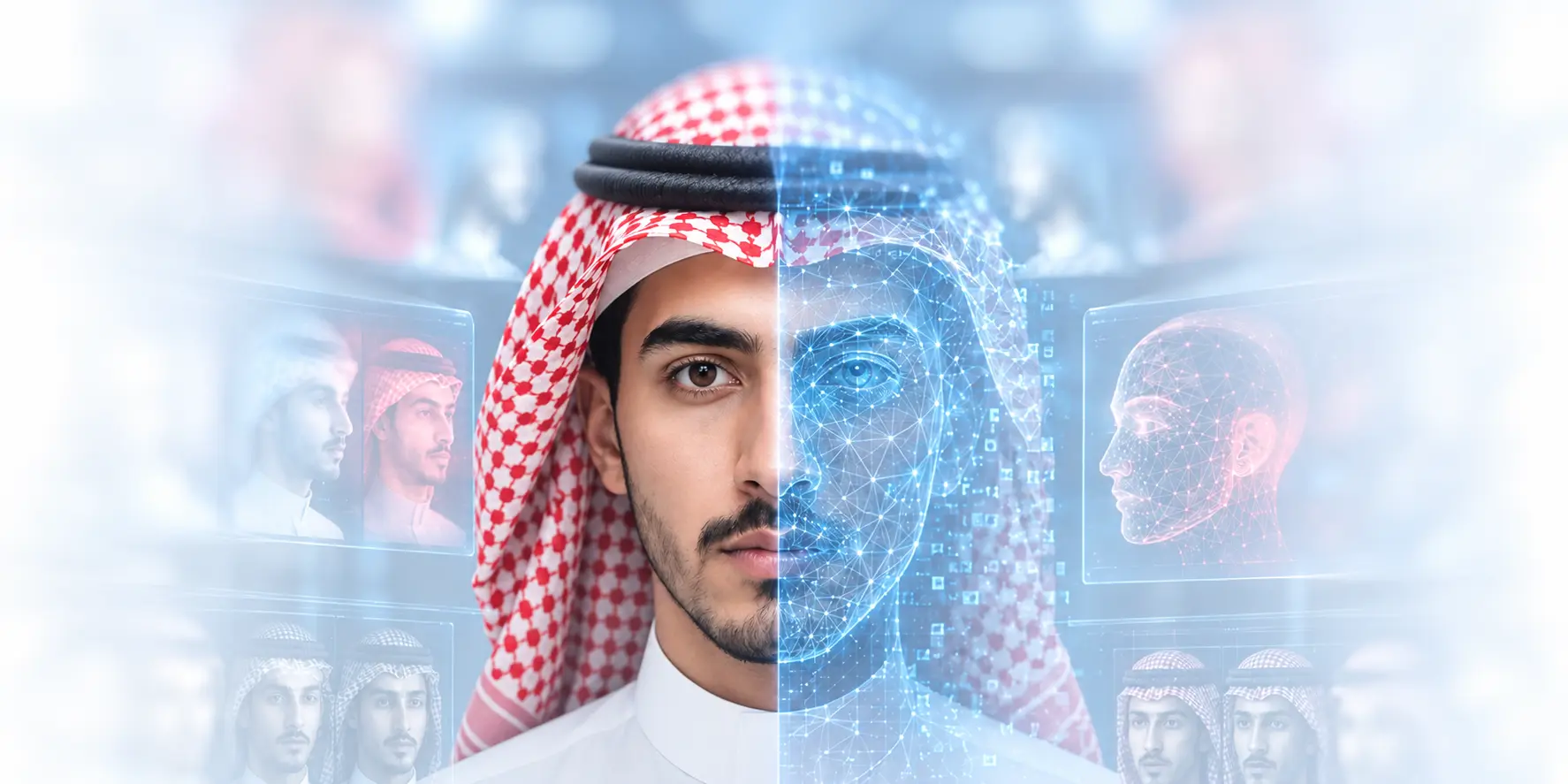
A joint awareness campaign by the Saudi Data and AI Authority (SDAIA) and the Communications, Space and Technology Commission (CST) for the Year of AI 2026. It explains deepfakes and their risks, and helps you protect your image, your voice and your personal data, and check content before you believe or share it.
A joint campaign by




What is a deepfake?
A technology powered by artificial intelligence and deep learning that creates or modifies digital content so realistically that it is hard to tell what is real and what is fake.
Seeing someone in a video or hearing their voice is not proof that they said it, and views or reshares don't make content true.
Types of deepfakes and how to spot them
- Visual deepfake
A person's face placed on someone else's body, or lips moved to say words never spoken.
Includes: face swapping, face generation, reenactment, lip syncing and puppeteering.
How to spot it
- Watch the eye movements and blinking
- Do the facial expressions look natural?
- Do the lighting and background look real?
- Do the lips match the voice?
- Audio deepfake
An accurate copy of a person's voice, or recordings of things they never said.
Includes: voice cloning and text-to-speech.
How to spot it
- Listen for odd changes in tone or pitch
- Any unnatural pauses or robotic sound?
- Is this how they usually speak?
- Text deepfake
A post or chat made to look like it came from a well-known person, or content credited to an organization with no source.
Includes: generated and synthetic texts.
How to spot it
- Does the wording match their usual style?
- Do the dates make sense?
- Is there an official source or verified account?
Edited or fake?
- Better lighting or a cropped scene
- Used in photography, education and media production
- Doesn't change the facts or deceive anyone
- Creates a scene or speech that never happened
- Presents something made-up as real
- Made to mislead or cause harm
The risks
- Economic
Financial losses and scams.
- Political
Misleading public opinion and damaging reputations.
- Security
Breaking into verification systems and identity theft.
- Social and educational
Loss of trust, cheating and bullying.
Positive uses
Used responsibly, the same technology can serve the community:
- Creative
Films, games and virtual music shows.
- Educational
Simulating historical events, and training doctors and professionals in realistic settings.
- Legal
Reconstructing crime scenes, and protecting the identity of witnesses and victims.
How to counter it
- Raise public awareness
- Label AI-generated content
- Develop advanced detection tools
- Set strict regulations and laws
- Work together internationally, such as the Coalition for Content Provenance and Authenticity (C2PA) and the Content Authenticity Initiative (CAI)
Source: SDAIA study “Deepfakes: Risks and Potential Opportunities” (July 2025).