
Coordination of frequency usage is made at the national and international levels in order to avoid overlaps between frequency allocations
International Coordination:
Since frequencies are not bounded by geographical borders between countries, and to avoid harmful interference across the border, cooperation and coordination among countries is necessary. Frequency periodic newsletters issued by the International Telecommunication Union every two weeks provide the information necessary for international coordination of terrestrial and satellite services.
National Coordination:
Coordination of frequency allocations is made at the national level through Spectrum Management Law whereby the engineering analysis necessary to determine the appropriate frequencies is conducted to avoid interference between different usages.
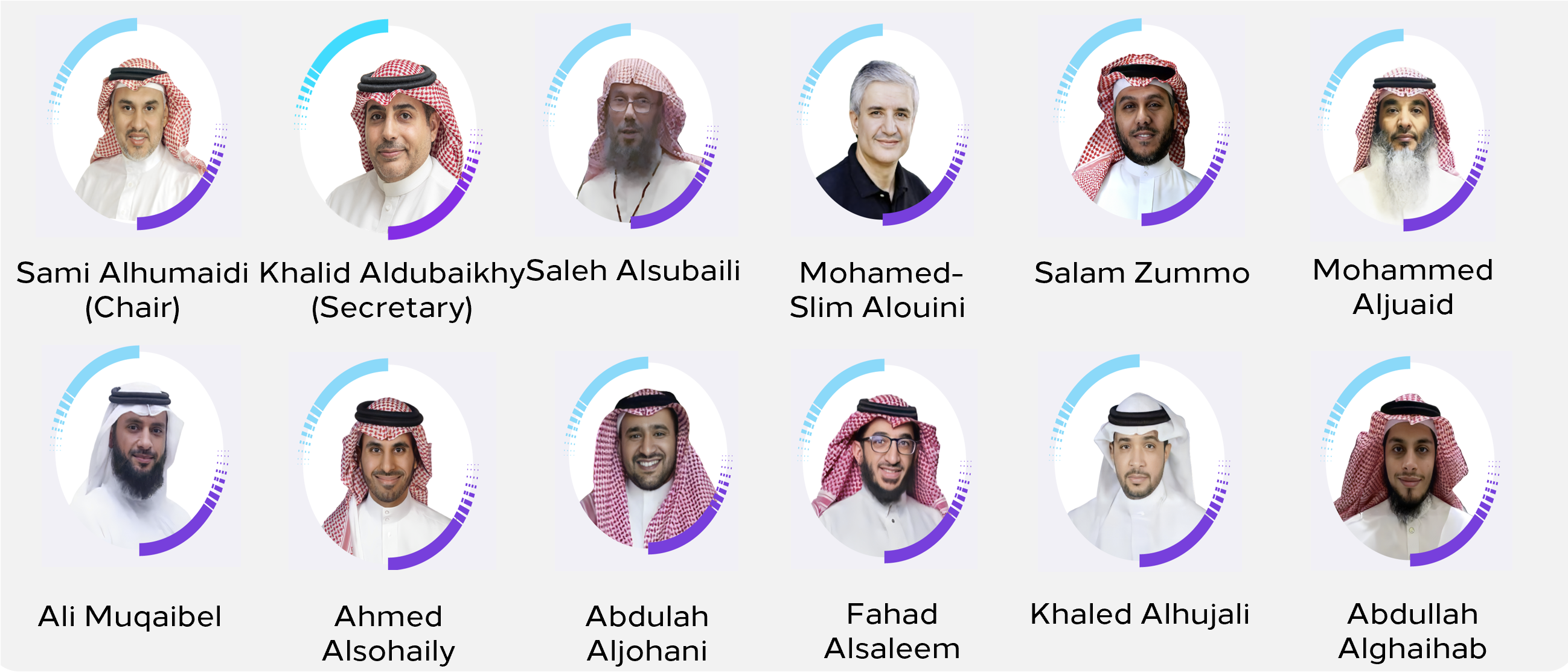
Formation of the National Spectrum Coordination Committee
The formation of the National Spectrum Coordination Committee was approved in the CST board meeting No. (2020/154) on 7/7/1441 AH, corresponding to 2/3/2020 AD.
Chaired by His Excellency the Governor of the Communications, Space, and Technology Commission, with members representing the following entities:
- Ministry of Defense
- Ministry of Interior
- Ministry of National Guard
- Presidency of State Security
- General Intelligence Presidency
- Ministry of Communications and Information Technology
- Ministry of Transport, represented by:
- General Authority of Civil Aviation
- General Authority of Transport
- Ministry of Media
- Ministry of Environment, Water, and Agriculture, represented by:
- National Center for Meteorology
- Communications, Space, and Technology Commission
- Saudi Space Agency
Since its establishment, the committee has held (14) meetings.
Objectives & Responsibilities
Objectives of the National Radio Frequency Coordination Committee
- Supporting for optimal and efficient use of the radio spectrum
- Cooperation to provide radio services in an environment free from radio interference at both the local and international levels
- Supporting the reinforcement of the principle of cooperation among government entities based on their actual needs
- Striving to achieve fairness in granting access to all national sectors
- Supporting the Authority's work in managing the radio spectrum in the Kingdom
- Encouraging the adoption of modern radio technologies that are most effective in achieving optimal frequency usage
Responsibilities of the National Radio Frequency Coordination Committee
Without prejudice to the powers and responsibilities of the board and the Commission as outlined in the law, regulations, and their executive bylaws, the committee is responsible for studying and submitting recommendations, as delegated by the Board, regarding the national coordination of the radio spectrum, as follows:
- Enhancing national coordination and cooperation to implement the national radio spectrum strategy.
- Supporting the Commission’s work regarding local and international coordination concerning the radio spectrum.
- Contributing to the implementation of the national radio spectrum plan approved by the Council of Ministers.
- Coordinating the use of frequencies for military and security entities, working to enhance their efficiency in using frequencies, and studying their future needs.
- Supporting the collection of financial compensation for the use of frequencies.
- Considering any matters raised by the committee's representatives related to the national coordination of the radio spectrum.
National Frequency Spectrum Coordination Committee














National Team for Preparation for the World Radiocommunication Conferences
The team aims to prepare for the 2027 World Radiocommunication Conference and to reflect the Kingdom's position on the conference agenda items at the regional and international levels with More than 20 entities.














Radio Spectrum Advisory Group
The team's role is to identify the trends and research interests in the field of radio spectrum in the Kingdom, contribute to strengthening the partnership between the government, private, and research sectors to support local research and innovation outputs in the field of radio technologies and enhance the Kingdom's international role in these areas




Key Topics of the Committee in Its Previous Meetings
The committee contributes to important topics related to wireless applications at the national level, and some of the key topics include the following:
- Development of the National Radio Spectrum Strategy 2030.
- Providing frequency needs for various radio services.
- Advanced Air Mobility (AAM).
- Plan for the use of the 5.9 GHz band for Vehicle-to-Everything (V2X) communication technologies.
- Development of the regulatory environment for radio services (broadcasting, maritime, aviation, and space).
- Electromagnetic field exposure regulations.
- Digital Audio Broadcasting (DAB+) plan.
- Updating the National Radio Spectrum Plan.
- Establishing Radio Frequency Management Offices for government entities using the radio spectrum.
- Commercial and Innovative Radio Frequency Usage Plan (2024–2027).
- Develop a plan to provide frequencies to enable defense and security applications by 2030.
- Preparation for the World Radiocommunication Conference.
- 5G Networks and their impact on humans and the environment.
- Protecting Aviation Systems (Radio Altimeter) from 5G Networks.