
Space-borne

Space-borne

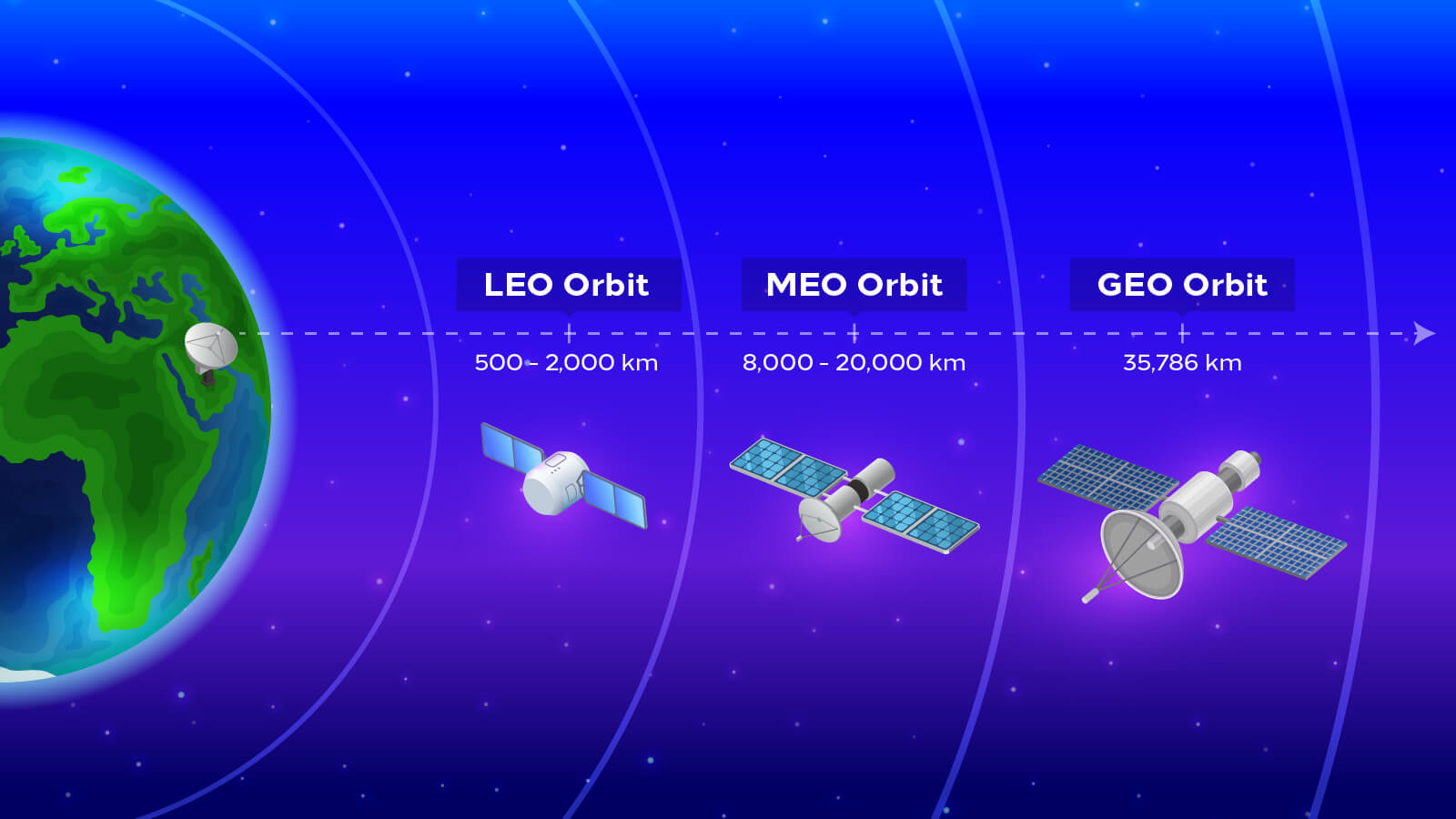
Satellite communication networks utilize space-borne platforms which include low Earth orbiting (LEO) satellites, medium Earth orbiting (MEO) satellites, and geosynchronous Earth orbiting (GEO) satellites.

Table Matrix

Satellite Orbits Comparison

GEO (35,786km) MEO (8000 to 20000 km) LEO (500-2000KM)
Altitude latency High Low Very low
Earth coverage Very large Large Small
Satellites required Three Six Hundreds
Data gateways Few fixed Regional flexible Local numerous
Antenna speed Stationary 1-hour slow tracking 10-minute fast tracking
Advantages High throughput (HTS) technologies enable basic broadband internet applications Proven low latency comparable to terrestrial networks, offers fibre-equivalent performance Claims support for high-frequency trading, virtual gaming, and high-performance computing applications
Fewer satellites over very large fixed geographical areas Simple equatorial orbit covers 96% of global population Smaller, lower power satellites batch-launched more cheaply than GEO
Disadvantages High altitude and distant ground networking impacts latency-sensitive applications Dual tracking antennas required to maintain continuous connectivity Very complex tracking and ground network, plus complete constellation must be in place before service starts
Signal power losses require larger satellites and antennas Inclined plane orbits needed to cover high latitudes Unproven business model, risky technology, and space debris risk

Your response has been submitted.